As most farmers know, when soil pH drops below 6.5 and becomes acidic, the uptake of essential nutrients—nitrogen, phosphorus, and potassium—is significantly limited. To maximise nutrient availability, it is important to maintain soil pH at optimal levels. In this Focus guide, we explore how LimeX, a co-product of British Sugar, can effectively raise soil pH. We hear from the LimeX team, Glenn Carlisle and Emily Whitmarsh, who explain how the product’s fine particle size delivers rapid results.
Maintaining the right soil pH is fundamental to healthy crop development. Even minor imbalances can limit nutrient uptake, leading to stunted roots and canopy growth, distorted plant architecture, and ultimately, reduced yields.
In partnership with
Unlock bigger forage yields with correct soil pH
Top tips to help prepare for spreading LimeX and the science behind it
The reliability of LimeX for your farming business
The value of LimeX as a liming material
The importance of soil pH in forage production
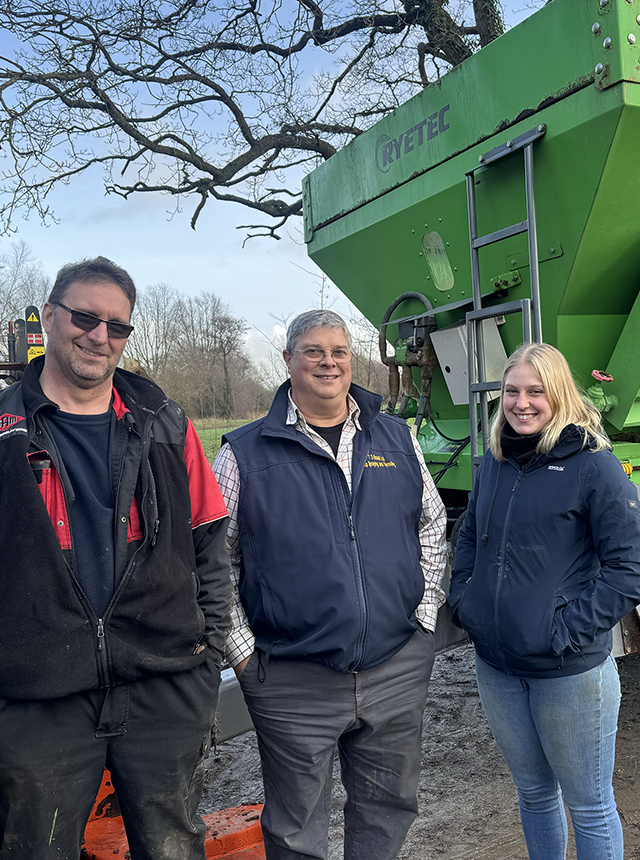
Dr Paul Newell-Price shares his expertise on the optimum soil pH for grasslands and discusses its practical implications for farmers. We visit Peter Knight, a farmer in Cranleigh, to learn about his experiences using LimeX across his operation. Contractor Tim Boxall and his team also explain why they chose LimeX over traditional quarry lime and how sourcing has remained straightforward even outside the sugar beet-growing area.
Dr Paul Newell-Price, head of soils and nutrients at ADAS
Below pH 5.5 is when you start to see real impacts in terms of grass yield
Farming is constantly facing unpredictable challenges, from weather to policy changes, which can impact yields. However, soil acidity is a more manageable factor that, when controlled, supports healthy crop and root development, ultimately leading to higher yields. Dr Paul Newell-Price at ADAS leads soil research and offers guidance for on-farm decision-making. Working on projects such as the review and revision of the Nutrient Management Guide and development of nutrient management software tools in collaboration with DEFRA and AHDB, Dr Newell Price understands the vital role soil health plays in crop viability.
"Soil pH measures the acidity of the soil, which underpins the availability of a wide range of nutrients" says Dr Newell Price. “As the soil becomes acidic, the major nutrients that the crops and the grass need become less available, and potentially toxic elements and aluminium ions become more available. So, it interferes with the uptake of nutrients the crops need to grow.” Although the optimum pH can vary slightly depending on soil and crop type, the ideal pH for grassland systems is around 6. “Different crops have their own critical pH below which the yields are impacted quite significantly. Grass species can generally cope with more acidic soil than clover, for example, and some other legumes like sainfoin and bird’s-foot trefoil prefer a higher pH,” says Dr Newell-Price. “Having an acidic soil interferes with nutrient availability, and most of the major nutrients are most available at that six to seven pH range, neutral to slightly acidic. “We tend to have a target pH or optimum pH within arable systems of about 6.5 and in grass systems about 6”.
What is soil pH, and why is it so important?
With changing weather conditions, continuing heavy rainfall and generally wetter winters, soil pH continues to be affected over time, and Dr Newell Price explains that it is most noticeable on soils with naturally low pH. “We have some calcareous soils, the soils on chalk and limestone, which are quite naturally high pH, and they tend to retain that high pH over time pretty well. But all other soils and naturally acidic ones tend to lose lime and calcium readily through rainfall and the use of manures and fertilisers. “The pH level will drop over time if you don't lime. We know from survey work that's been done and the values that are reported by the labs that receive the soil samples that we have a range of pHs across the country, and we do have quite a significant proportion that are below optimum and below 5.5, which is when you start to see real impacts in terms of grass yield.” “So, within productive, improved grassland systems, especially if you're using manufactured nitrogen fertiliser, then it's really important to get the pH right”.
What does the current grassland pH landscape look like?
Not only does low soil pH affect nutrient availability and uptake, but it can also impact other areas of plant growth. “It also affects the soil structure. So, your actual soil structure is not optimal. Your soil isn't well aerated, so roots can't spread as far into it, and so it could affect the root architecture and root proliferation,” says Dr Newell-Price. “You also get a decline in sward quality in terms of species composition. So, you might get more weed species coming in because the pH isn't right for those productive species you want maintain in the sward.”
How does low soil pH impact grass yields?
Nitrogen, phosphorus, potassium, magnesium and sulphur are the major nutrients according to Dr Newell Price. “You could probably throw calcium in there as well, but in terms of what we tend to apply, in terms of the calcium application, if our pH is right, we tend to think within grassland systems that the calcium supplies are pretty good if you've got a good balance of calcium and magnesium in the soil”.
What are the essential nutrients required?
To raise the soil pH and decrease acidity, an alkaline substance can be added to achieve a neutral pH; this is typically present in liming products. When it comes to choosing which liming products to use and when to lime, Dr Newell-Price suggests there are two approaches: every four/five years or little and often. “There are different liming products. You have options like ground limestone, magnesium limestone or chalk, which can be spread efficiently using a twin-disc spreader by a contractor. These are typically applied in bulk and offer good neutralising value and effective liming. “Or, you can get a prilled product which you can spread out of a fertiliser spreader that will be more costly in terms of the product price, but you can spread it out of your own fertiliser spreader, and you can spread little and often”. LimeX is among the former and offers strong neutralising properties and overall intrinsic value. “LimeX is a calcium carbonate-based liming product. The carbonate reacts with the acidic hydrogen ions in the soil to make neutral carbon dioxide and water, and what’s left is an abundance of calcium. So, by applying LimeX, you’ve replaced the acidity in your soil with calcium, which is an essential macro nutrient for all plants and also plays an important role in improving soil structure, aeration and drainage,” says LimeX Business Manager, Glenn Carlisle.
How can you increase soil pH?
LimeX contains four essential nutrients, calcium, phosphate, magnesium and sulphur, and helps correct soil pH. However, its most distinctive feature is its very fine particle size, which allows it to raise pH quickly while delivering long-lasting effects.
What are the benefits of using LimeX?
LimeX is at least 85% passing a 150-micron sieve and greater than 95% reactive in the Aglime Quality Standard assurance scheme.
Glenn Carlisle, Business Manager at LimeX
LimeX’s very fine particle size means the pH rises rapidly and calcium becomes available much more quickly than with coarser products
Glenn Carlisle, explains the advantage of smaller particles. “LimeX has a very, very fine particle size, meaning that when you apply it to your soil, the pH rises very rapidly and the calcium is much more available than other coarser liming products on the market,” says Glenn. “LimeX also has an additional nutrient benefit: 9 kg of phosphate, 8 kg of magnesium, and 7 kilos of sulphur in every tonne. “At a normal application rate of 5.0 to 10 tonnes per hectare, depending on the starting pH of your soil, this is a good dose of phosphate that you won't need to pay for out of a bag.”
TOP TIPS
RELIABILITY OF LIMEX
THE VALUE OF LIMEX
IMPORTANCE OF SOIL pH
HOME
Dr Paul Newell Price, Head of Soils & Nutrients at ADAS, discusses the science behind the correct pH level and explains how even a minor shift of one pH unit can affect overall crop growth. Moreover, Glenn Carlisle, Business Manager at LimeX, highlights how using finer particle sized liming products can lead to faster results.
The optimum soil pH for grassland systems sits at around the 6-6.5 mark, but what does that really mean, and why is it so important to help increase yields?
Peter Knight, farmer
Unless you're over chalk, you're going to have a pH issue to a greater or lesser degree
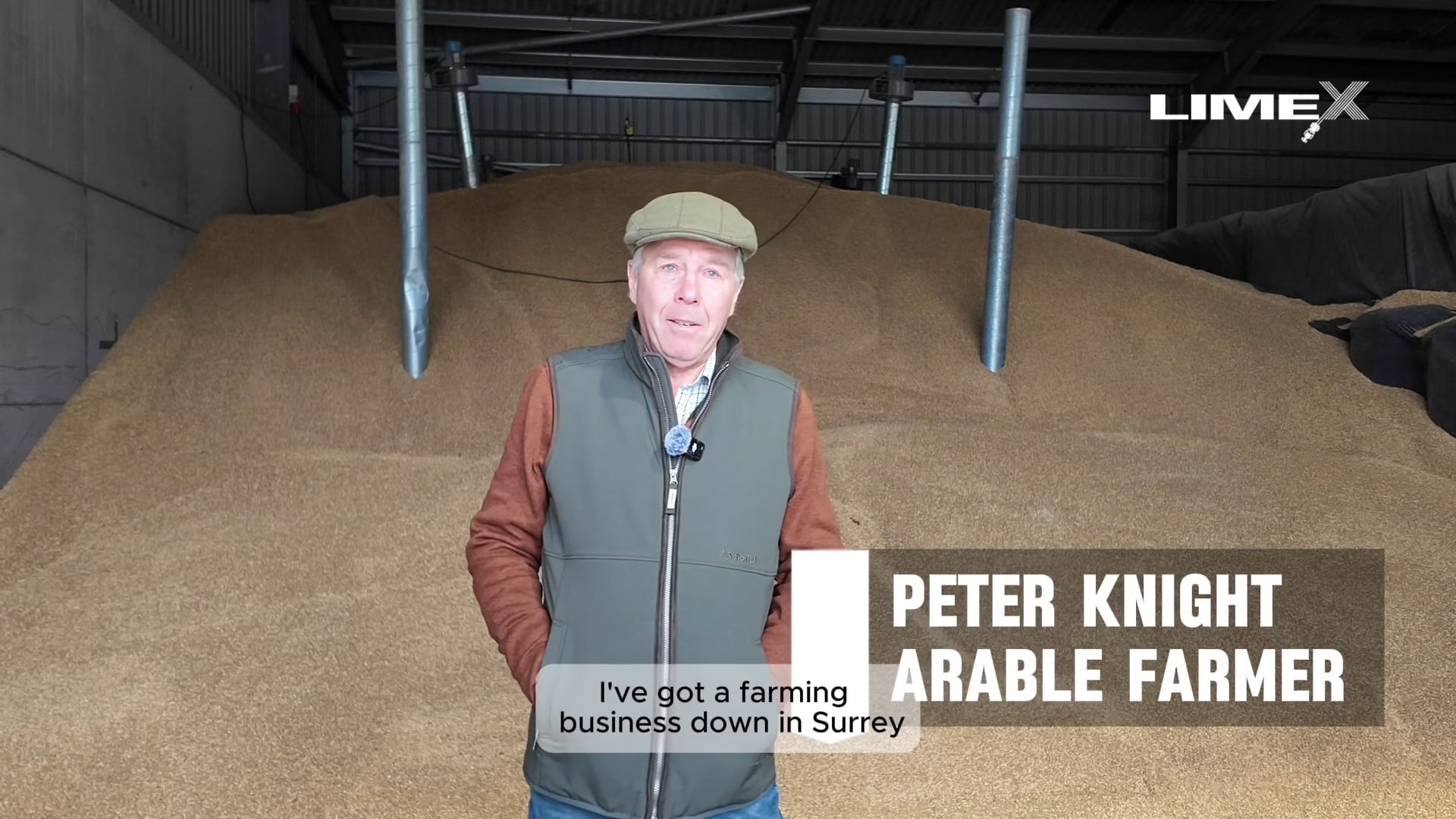
Running his own farm and arable contracting business, Peter Knight farms around 2,500 acres across 30 miles and sits on the NFU National Crops Board. “Soil pH is always an issue. I don't think it matters much where you farm. Unless you're over chalk, you're going to have a pH issue to a greater or lesser degree,” says Peter. “It's fairly pointless spending money on nitrogen, phosphate and potash if your pH is way out. It's got to be about soil health and balance. We all know that if your soils get totally askew, either very high pH or very low pH, you're going to end up locking up other elements. So, you have to try to keep a balance. “The soils we farm here, down in the south, are on weald clay. We've got a bit of green sand in between, and then we go up onto some chalk on the North Downs. Obviously, the downlands are not a problem, but all the rest of the soils that we farm, we end up liming probably once every four or five years.”
Soil pH has consistently been a challenge for Surrey farmer Peter Knight. However, after he could no longer use lime-treated biosolids to target the problem, he turned to LimeX last year as an alternative method and says quality was the key to his decision.
There are many benefits to using LimeX, as each tonne contains 9 kg of phosphate, 8 kg of magnesium, and 7 kg of sulphur. “LimeX features an extremely small particle size, enabling quick correction of soil pH. This is especially crucial for grassland application, as the product must be fine enough to penetrate through the growing crop and reach the soil without needing cultivation assistance,” explains Glenn Carlisle, Business Manager at LimeX.
The key differences between LimeX and other liming products
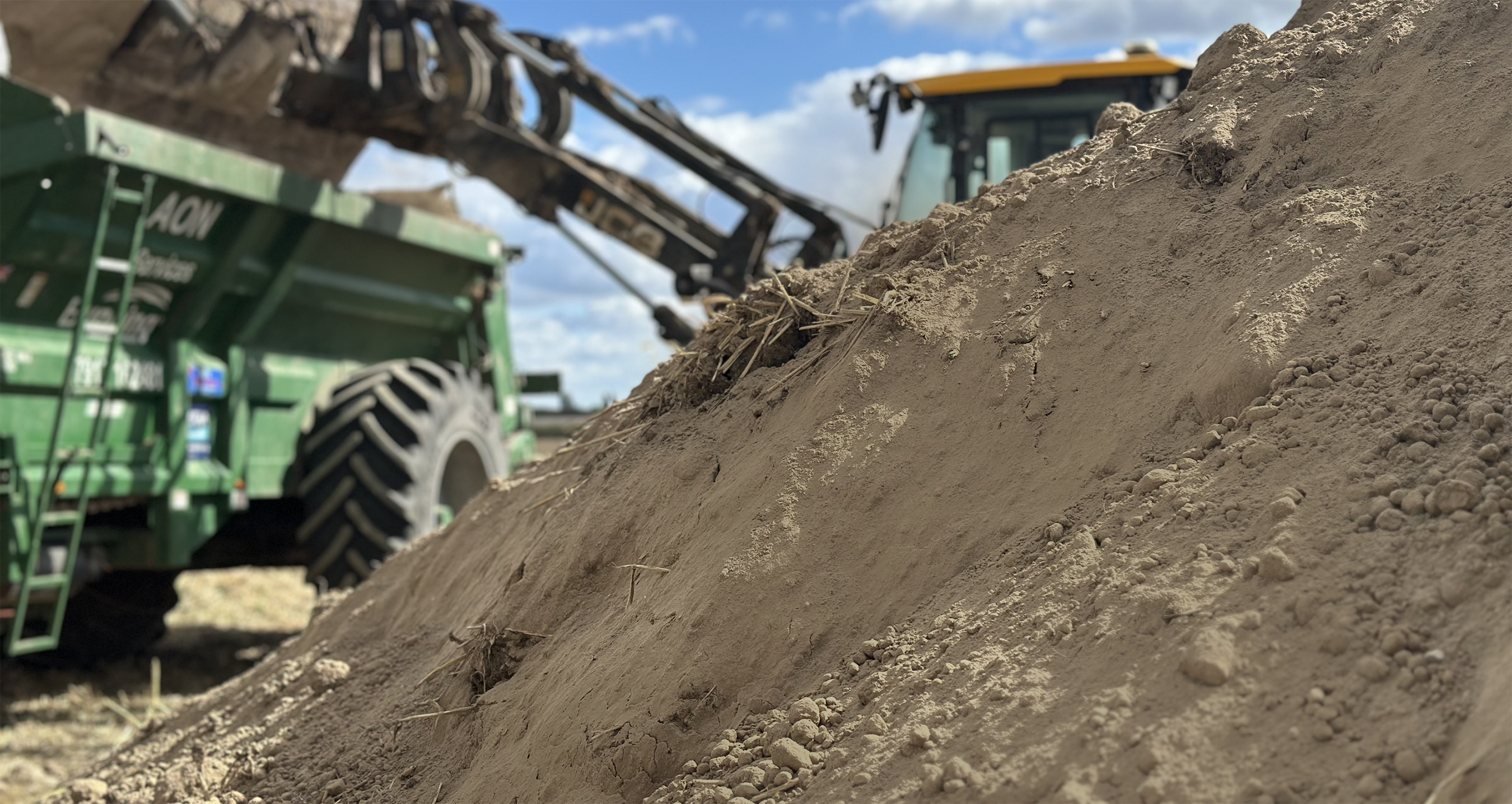
When sourcing LimeX, Peter says he has no problems with delivery, even though he is located outside the usual sugar beet-growing areas. “We just rang up, ordered the lorry loads that we wanted, and it was tipped in the field because it was dry enough to get out in the field. No problems at all,” he says. Looking ahead, Peter plans to continue using LimeX. “We will be using a bit this spring, and we've got some land that will be going into fodder beet, which needs some lime. So yes, we'll be using LimeX.”
Sourcing LimeX outside of the sugar beet growing area
Contact Glenn or Emily today to discuss your options.
LimeX is available nationwide
As a farmer, Peter has found LimeX to offer great value and quality when compared to previous products. “It's what you're getting for free in LimeX. Historically, we've used ground chalk, and although that works as a liming product, the quality can be a bit variable depending on how well it's been crushed. LimeX, I found that what we used last autumn was of really good quality. You're getting phosphate for nothing, magnesium for nothing, a bit of sulphur for nothing. There's a lot in there beyond the neutralising value, and that's what swayed me towards LimeX,” says Peter. Furthermore, Peter has recognised the benefits of applying LimeX on grassland, adding trace elements, phosphate and magnesium to the soil. “The grassland that we've used it on is basically permanent pasture, not part of an arable rotation, being used to cut for hay for horses, haylage and hay, and therefore, it's just ground that needed a bit of lime to get it back in sensible shape.”
As part of an arable rotation, Peter applies his lime in the autumn, with his first LimeX application in 2025; he is keen to see the first impact this summer. “Traditionally, we've used Thames Water's Bio solids lime cake, and that's what we've used ever since I've been here. There was a period when we used lime-treated biosludge, which gave us a fair amount of lime. However, that's disappeared, so we can't get that anymore, so we've been looking at alternatives”.
You're getting phosphate for nothing, magnesium for nothing, a bit of sulphur for nothing. There's a lot in there beyond the neutralising value, and that's what swayed me towards LimeX
Tel: 0800 090 2376 Email: agriculture@britishsugar.com
VIDEOS:
Click an image to view that video
3. Key difference between LimeX and other products
WATCHING
2. Is soil pH an issue?
1. Introducing Peter Knight, farmer
4. Sourcing LimeX outside of the sugar beet area
Farmer perspective with Peter Knight
LimeX is a very very consistent product, easy to spread, goes the distance we need to spread it
Tim Boxall, a contractor for spraying and spreading in Kent at T.D. Boxall Ltd. explains why his business turned to LimeX and shares its experience sourcing the product, despite being outside the sugar beet growing region.
George Franklin, part of Tim’s team who operates the spreaders and sprayers, discusses his experience with LimeX in the field and explains the importance of correct soil pH. “LimeX is a very, very consistent product, easy to spread and covers the width we need to spread it,” says George. “It's a faster-acting product because it's a very small particle size, so it reacts faster in the soil.”
Small particles with big results
Tim, based in Headcorn, Kent, has operated his business for more than 40 years, primarily using bulk-delivered products, including fertilisers like Fibrophos, LimeX, and local quarry lime. Over the past year, his business has seen increased demand for lime to neutralise soil pH across his clients’ farms. “As a contractor, we're seeing farmers using more lime, particularly last year. There was a lot more liming going on because I think people didn't want to spend the money on fertiliser, so they wanted to bring up their soil pHs to release what was available in the soil,” says Tim. “We found it a challenge to get as much lime as possible, which is why we moved into LimeX to fill the gap and the supply issues as it was more readily available”.
Even though Tim is outside the sugar beet growing area, sourcing LimeX has been smooth and efficient. “Getting LimeX from British Sugar has been absolutely no problem at all. It's no different from us sourcing fertilisers from further afield. Transport's been good, prices have been competitive compared to local quarries, and we've been able to maintain a supply of product. That's a big issue for us,” he says. It’s not just sourcing that has been a good experience; repeat custom has also shown a strong reception from his farmers. “We've got one repeat customer this spring, mainly from a supply issue point of view, but also the consistency of the product. It spreads well as a smaller particle and increases the pH rapidly”.
A reliable liming source
George Franklin, contractor
We've got one repeat customer this spring... due to the consistency of the product. It spreads well as a smaller particle and increases the pH rapidly
Tim Boxall, spraying and spreading contractor
Emily Whitmarsh, LimeX Technical Sales Manager, says that LimeX is available nationwide and reassures customers that sourcing is simple. “With all my contractors and farmers, I ensure a smooth delivery from start to finish and continue to communicate throughout the process. It’s often a misconception that LimeX is only available in sugar beet growing areas, however, I want to reassure people that we deliver across the UK”.
George explains that, in the past, he has seen grass yields drop significantly on farms that forgot to lime. “pH is an issue when you're taking off large quantities of high-yielding crops. You're going to have lower phosphate levels and obviously lower lime levels as time goes on, especially if it hasn't been addressed for a number of years.” Josie Boxall, sprayer and spreader operator, adds that T.D. Boxall Ltd uses weigh loaders on the machines to apply LimeX accurately across different fields and farms. “Having the weigh loaders means we can continually check the calibration of the spreaders for peace of mind that the LimeX is going on at the right application rate.”
I want to reassure people that we deliver across the UK
Emily Whitmarsh, LimeX Technical Sales Manager
3. Josie Boxall, sprayer and spreader operator
2. George Franklin, contractor
1. Tim Boxall, owner, T.D. Boxall Ltd
With the T.D Boxall team
Read our Q and A with the LimeX team, Glenn Carlisle and Emily Whitmarsh, for their expert advice on soil sampling, delivery and the science behind the process.
Glenn: Over 50% of arable soils are below the target pH of 6.7 recommended in AHDB’s Nutrient Management Guide (RB209), according to the results from over 50,000 soil samples analysed by NRM between June 2022 and May 2023. Nearly 25% of the samples were pH 5.8 or lower, which is extremely low for arable crops, and only about a fifth of all samples were in the acceptable target pH range of 6.5 to 7.0.
Q. How do I know if my soil needs liming?
Emily: We offer three packages: Collect: Customer arranges haulage Delivery: British Sugar Agriculture Manager or LimeX team use our network of approved hauliers to provide the best quote and confirm with customer Delivery and spreading: If in the beet growing area, our Agriculture Managers can also arrange spreading with a local spreading contractor
Q. How do I order LimeX?
Those results tie in with industry studies suggesting arable land is only being limed on average once in 12 years – way below the recommendation of one in 3-5 years. Soil sampling is the easiest way to understand whether a field needs liming. British Sugar can make this easy for you. If you’re in a beet growing area and have a British Sugar account, log onto the ‘My British Sugar” portal to input fields and the type of analysis you need. Your local British Sugar Agriculture Manager can help with this if you need support. You don’t have to be a beet grower, though. We offer our soil sampling service to all farmers and landowners across East Anglia and the East Midlands – simply call 0800 090 2376 and our British Sugar Services team will assist you. Once ordered, the soil sampling team will ring you to arrange an appropriate time to visit and take the samples. Results will be ready within 21 days, and a member of our FACTS-qualified Agriculture team will get in touch to take you through them. If you’re based outside the beet-growing area, find a reputable soil testing service to carry out a pH test. One sample per acre is best practice, but sampling in a “W” pattern will give a good indication of any pH issues. If you need advice on lime application rates, your local Agriculture Manager or one of the LimeX team will be available to provide guidance.
Once a tonnage has been confirmed, we will ask you where you want it tipped. We need a specific location and/or postcode for this. Several factors are important when considering tip sites. First, are there any overhead power lines in the vicinity? Is this site suitable for an artic lorry, or would an eight-wheeler be more suitable? Ideally, we would recommend tipping onto a concrete pad – in winter or when it is wet, hauliers won’t do field tips. Accessibility for the delivery vehicle is important – gateway widths and narrowness of roads and lanes need to be factored in. Again, in the beet area, these are all things your British Sugar Agriculture Manager can help with to make the process as easy as possible for you. Once sorted, the haulier will ring you to arrange delivery. Your British Sugar contact will check with the haulier when LimeX can be delivered, and will stay in touch to let you know when it has been tipped for you to arrange spreading or when both delivery and spreading has happened.
Optimum soil pH for grassland is 6.5, any lower than this and nutrient availability to plant will be compromised.
When should I apply LimeX to grassland?
With British Sugar’s factories located in East Anglia and the East Midlands, it is a common misconception that LimeX is unavailable to farmers outside this area or those who don’t grow sugar beet. There are LimeX distributors located across the country offering competitive rates.
P
S
Mg
Ca
6.5
Doing this every three years is advisable. In most situations, a maintenance dressing of LimeX will be adequate to keep soil pH at its optimum level.
It’s best to develop a schedule of regular soil sampling to check the soil’s pH.
LimeX contains over £14/t of extra nutrients
Did you know?
Not maintaining the proper pH balance can significantly impact nutrient availability, root development, and overall plant growth.
High rainfall and waterlogged soils, nitrogen application, and slurry applications are all factors that will decrease soil pH.
Calcium is the forgotten macronutrient. Taking grass off the land for silage, hay or through grazing will deplete calcium levels in the soil, which in turn will reduce the nutrition quality.
Phosphate 9kg/t
Sulphate 7kg/t
Magnesium 8kg/t
Key facts
Calcium 220kg/t